Employees are vital human capital who play a crucial role in creating economic value for both the organization and society. They also serve as a key driving force enabling the company to achieve its business objectives and goals. Accordingly, BAM consistently recognizes the importance of strengthening and developing its human resource management processes to ensure long-term effectiveness and sustainability. All employees nationwide are treated in accordance with principles of fairness, equality, and non-discrimination, under consistent standards applied throughout the entire employment lifecycle, from recruitment and employment, to employee development, talent retention, and termination of employment. This includes, for example, the provision of appropriate compensation and benefits in compliance with legal requirements, the establishment of equitable career growth and advancement pathways, and the implementation of systematic training and development plans to enhance employees’ skills and knowledge. These efforts aim to strengthen employee capabilities in alignment with the Company’s business growth direction. In addition, the Company encourages collaboration among employees and fosters a culture of giving by organizing various activities that contribute positively to society. (3-3)
The Company recognizes and places strong emphasis on developing the knowledge, skills, and capabilities of all employees, as competent personnel play a critical role in creating long-term organizational value. This includes improving operational efficiency, enhancing employee engagement and organizational commitment, maintaining an appropriate workforce balance, reducing employee turnover, and minimizing organizational costs arising from operational errors. Furthermore, the Company manages employee working hours in compliance with labor laws and implements systematic workforce planning, which is reviewed annually to ensure adequate staffing levels, reduce excessive workloads, and prevent working hours from exceeding legal limits. These efforts aim to cultivate employees with leadership potential and work flexibility, enabling them to adapt to future changes, while also encouraging innovation, creating business opportunities, and building long-term organizational sustainability.
Amid continuous change and increasing demand for new skill sets, employee development is not only a strategy to enhance operational efficiency and job satisfaction but also a critical factor in sustaining the Company's long-term competitiveness. Accordingly, human resource development is regarded as a core responsibility of the Human Resources function. This responsibility extends beyond the recruitment and selection of qualified personnel to include the retention and continuous development of all employees, enabling them to grow together with the organization.
Human Rights Dimension Operations
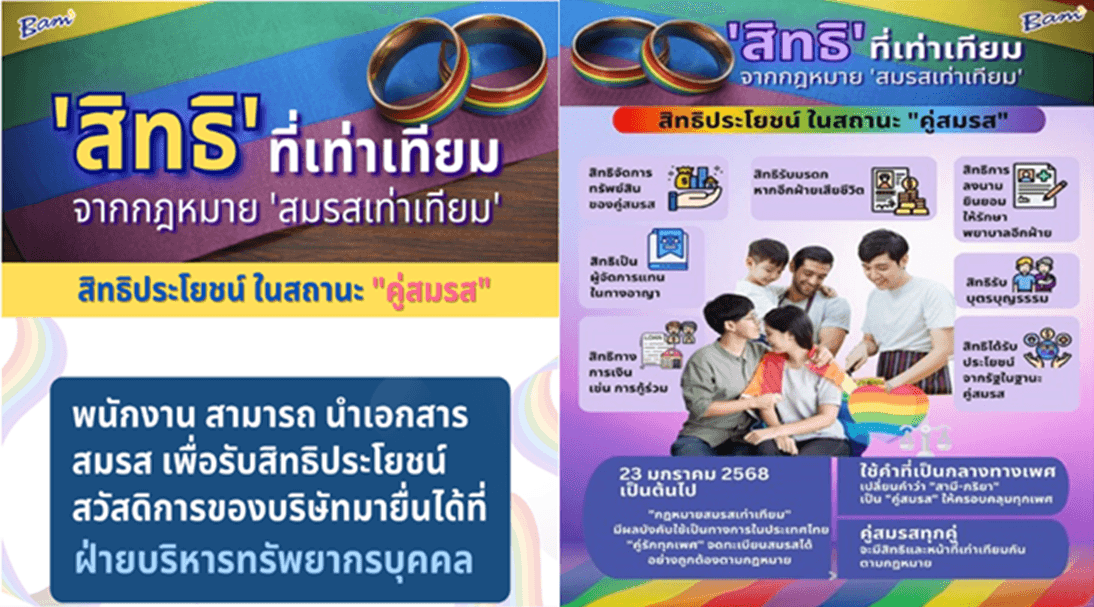
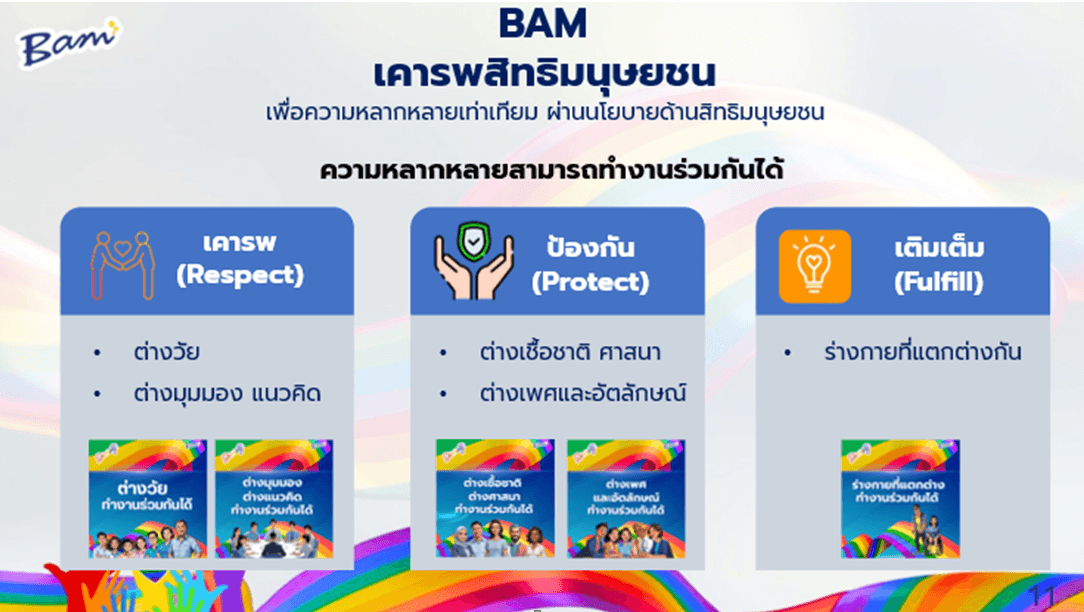
BAM prioritizes creating a workplace where everyone is treated equitably. The Company does not discriminate or restrict employment opportunities based on sexual orientation or gender identity and promotes an inclusive and safe corporate culture for all. Bullying or harassment in any form is prohibited to ensure all employees feel valued and accepted for their differences. The Company also supports diverse employment across races and nationalities by providing equal opportunities for employees from different cultures to work together. Training programs are conducted to build understanding of cultural differences and promote a respectful and harmonious working environment.
In addition, BAM respects employees' rights and freedom to practice their religion according to personal beliefs by providing an environment conducive to coexistence with respect for religious differences. Employees are permitted to observe religious holidays in accordance with relevant regulations. The Company ensures equitable treatment for employees across all age groups, providing fair consideration in recruitment, professional development, and career advancement. By ensuring that age is never a determining factor in personnel decisions, the Company reinforces its commitment to equal opportunity for all.
Reflecting these core values, there were no reported cases of discrimination or human rights violations within the organization during the past year. BAM has established a framework of principles and guidelines for human rights operation, recognizing them as fundamental rights inherent to all people equally and without discrimination, regardless of origin, nationality, race, ethnicity, gender, skin color, religion, language, or social status. These guidelines support the implementation of the Company's human rights policy in human resources practices. Accordingly, the Company has developed Diversity Management Guidelines that embrace and value individual differences in the workplace.
Diversity, Equity and Inclusion
BAM recognizes that respecting human rights is a cornerstone of organizational sustainability and has integrated these principles into its fundamental business practices. The Company strictly adheres to domestic laws and internationally recognized human rights frameworks, including the Universal Declaration of Human Rights (UDHR), the United Nations Guiding Principles on Business and Human Rights (UNGPs), and the International Labour Organization (ILO) Declaration on Fundamental Principles and Rights at Work. The Company formalizes its commitment to human rights through its Human Rights Policy and Guidelines, endorsed by the Chairman of the Board of Directors. This high-level endorsement underscores the Company's dedication to preventing, mitigating, and reducing the risks of discrimination and human rights violations across all stakeholder groups in all forms. Our policy explicitly upholds the right to collective bargaining and ensures the principle of equal pay for equal work is strictly maintained. The Company strictly complies with national labor regulations, ensuring that all employees receive fair and appropriate remuneration. The Company’s wage structures are established at rates that ensure full compliance with the legal minimum wage while being strategically designed to support a decent standard of living for all employees. By guaranteeing equal remuneration for equal work, regardless of gender, age, race, or any other demographic factors, BAM reinforces its commitment to fairness, responsibility, and sustainable human resource management.
Operational Objectives and Performance
Operational Objectives
Subject 100%of Critical Tier 1 suppliers to rigorous human rights risk assessments.
Ensure zero reported casesof human rights violations or complaints for the 2025 fiscal year.
Performance
100%of Critical Tier 1 suppliers received human rights risk assessments.
Based on the Company's comprehensive human rights risk analysis process across all six areas,all human rights risks were assessed as low risk.
In 2025, BAM recorded no complaints related to human rights violations, and there were no cases or legal proceedings involving human rights infringements. This includes matters relating to anti-human trafficking, forced labor, child rights, child labor, discrimination, sexual harassment or misconduct in all forms, freedom of association, the right to collective bargaining, equal remuneration, and other human rights related issues.
Operational Objectives
Subject 100%of Critical Tier 1 suppliers to rigorous human rights risk assessments.
Ensure zero reported casesof human rights violations or complaints for the 2025 fiscal year.
Performance
100%of Critical Tier 1 suppliers received human rights risk assessments.
Based on the Company's comprehensive human rights risk analysis process across all six areas,all human rights risks were assessed as low risk.
In 2025, BAM recorded no complaints related to human rights violations, and there were no cases or legal proceedings involving human rights infringements. This includes matters relating to anti-human trafficking, forced labor, child rights, child labor, discrimination, sexual harassment or misconduct in all forms, freedom of association, the right to collective bargaining, equal remuneration, and other human rights related issues.
Board of Directors and Management's Governance Structure, Roles and Responsibilities in Human Rights Management
The Company has appointed a Working Committee for the Human Rights Model Organization Project, responsible for establishing operational guidelines on human rights, promoting knowledge, understanding, and participation in human rights matters, as well as supervising, reviewing, and monitoring the progress of implementation. The Committee is also tasked with allocating appropriate resources to ensure that the Company’s operations are conducted in accordance with good corporate governance principles in relation to human rights protection, and to foster a positive organizational image that upholds equality and non-discrimination.
Which consists of The Sustainability Corporate Governance Committee, appointed by the Board of Directors, is responsible for the strategic oversight of the Company's sustainability policies and management frameworks, including human rights across the entire supply chain. The Board of Directors provides strategic consultation and monitors organizational performance to ensure the Company achieves its sustainability objectives. Accountability is maintained by evaluating the performance of the Chief Executive Officer (who serves as a member of the Board) based on comprehensive Environmental, Social, and Governance (ESG) criteria, including human rights performance indicators.
BAM maintains a structured approach to ESG through the Sustainable Development Working Group (ESG) and the Governance and Sustainability Promotion Department. These entities are responsible for the design, development, and overall oversight of BAM’s sustainability and human rights frameworks. To ensure effective and efficient implementation, sustainability operations are integrated across core business functions, including the Human Resources Department, Risk Management Department, Social Responsibility Department, and Procurement Department.
The Sustainability Committee convenes on a regular basis to provide rigorous oversight of the Company's ESG performance. This body is responsible for evaluating policies, setting strategic targets, and approving action plans, with a specific focus on material topics and human rights risk mitigation. Historically, the Sustainability Committee serves a critical advisory role, offering strategic recommendations for the continuous improvement of the Company’s human rights management. Furthermore,
Human Right Due Diligence: HRDD
BAM conducts comprehensive assessments of salient human rights issues arising from its business operations and stakeholder relationships across the entire value chain. This is achieved by enabling stakeholder participation in the human rights management process through inclusive engagement and systematic consideration of stakeholder perspectives, which collectively inform the Company’s Human Rights Due Diligence (HRDD) process. Established policies and practices guide business conduct, reinforcing the Company’s commitment to preventing human rights violations across all stakeholder groups. The Company executes projects and initiatives that directly support established human rights policies, integrated with continuous monitoring and performance reviews. This operational framework adheres to the five-step methodology defined by the United Nations Guiding Principles on Business and Human Rights (UNGPs). This structure ensures that human rights impacts are systematically identified, assessed, and managed across the entire value chain.
1
Step 1
|
Policy Commitment
BAM recognizes the fundamental importance of respecting and upholding the human rights of all stakeholders. To this end, it has formally established and declared Human Rights Policies and Practices as a definitive policy commitment. These policies set out rigorous expectations for human rights compliance, applying not only to the Company’s internal operations but also extending to business partners, suppliers, and all associated entities across the entire value chain.
Further details are available on the Company’s website.
To ensure the seamless integration of these Human Rights Policies and Practices into business operations, BAM has disseminated the Supplier Code of Conduct and specific human rights requirements to all business partners and suppliers. This is conducted through letters, emails, and official correspondence, accompanied by contractual attachments within procurement agreements. These efforts are designed to elevate awareness and ensure a deep understanding of human rights responsibilities, which the Company identifies as a critical sustainability priority. BAM requires all suppliers to undergo a human rights self-assessment and formally acknowledge compliance with the Supplier Code of Conduct as part of its ongoing monitoring and oversight process. A total of 571 suppliers successfully completed the human rights self-assessment and formally pledged to follow the Supplier Code of Conduct and Human Rights Guidelines. This represents a 94% compliance rate across the Company’s entire supplier base.
2
Step 2
|
Human Rights Monitoring and Oversight
BAM monitors and oversees human rights practices by requiring employees to complete self-assessments. All employees (100 percent) have successfully completed the Anti-Corruption Declaration and Conflict of Interest Declaration. Concurrently, the Company requires suppliers to complete self-assessment forms demonstrating compliance with the Supplier Code of Conduct for continuous monitoring purposes. A key component of the Company's monitoring and oversight framework is the prevention of human rights violations, including the avoidance of complaints, legal claims, or litigation. This framework also addresses the prevention of copyright infringement, workplace harassment, and occupational health and safety risks, while promoting compliance with standards for efficient and responsible resource consumption. To ensure comprehensive oversight, the Company monitors both internal and external operations on an annual basis.
3
Step 3
|
Human Rights Impact Assessment
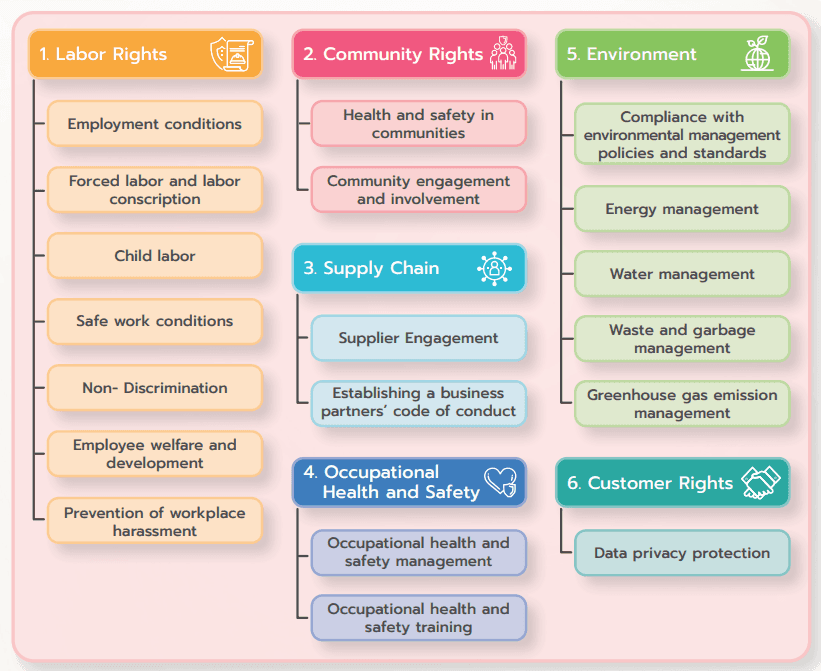
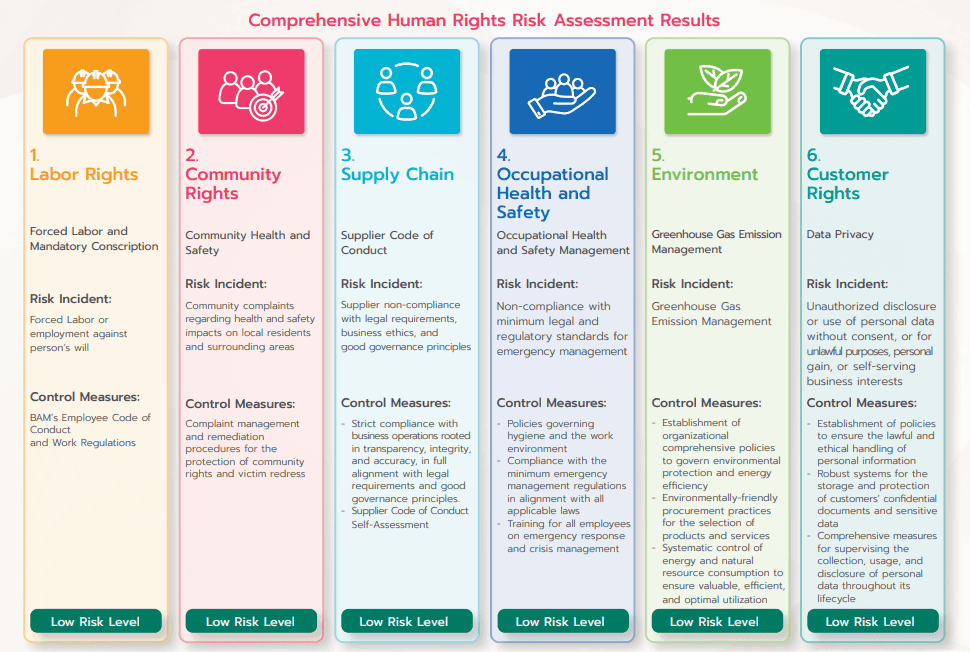
BAM conducts a Salient Human Rights Issues assessment to identify actual and potential risks arising from its involvement or through its business relationships. In alignment with the UN Guiding Principles on Business and Human Rights (UNGPs), this process considers stakeholders who may be directly or indirectly impacted by the Company’s activities. Moreover, BAM incorporates considerations of vulnerable groups, including migrant workers, persons with disabilities, third-party contract workers, and local communities, into its human rights risk assessment process. The scope of the assessment specifically targets critical risks such as equal pay, fair employment practices, and non-discrimination, ensuring full alignment with international labor standards and human rights principles. Assessment of human rights risks and impacts, including environmental impacts, is conducted through a comprehensive Human Rights Due Diligence (HRDD) process. This covers both direct and indirect impacts, as well as environmental issues that may affect human rights, with reference to internationally recognized principles and relevant standards, including: the UN Guiding Principles on Business and Human Rights (UNGPs), Thailand Sustainability Investment (THSI) criteria, and the FTSE Russell ESG Scores ESG assessment framework. This methodology ensures the identification of significant human rights risks across the entire value chain. To ensure a holistic view, the assessment is a collaborative effort involving the Corporate Governance and Sustainability Promotion, Human Resource Management, General Administration, and Asset Development departments, IT Strategy & Information Systems, Valuation, Legal Affairs, Investment Management, Asset & Collateral Operations, Accounting, and Risk Management. This comprehensive scope is categorized into six critical topics, encompassing labor rights, human rights, supply chain management, occupational health and safety, environmental responsibility, and community relations, the details of which are outline below:
The Human Rights Risk and Impact Assessment has been developed in accordance with the UN Guiding Principles on Business and Human Rights (UNGPs) and is reviewed every three years to identify and assess potential human rights risks in BAM's activities and value chain. This process ensures that all stakeholders respect human rights in accordance with international guidelines. To ensure the prevention of risks and mitigation of potential impacts, the following processes have been established:
Define Scope and Identify Human Rights Risks BAM systematically identifies actual and potential human rights risks across all operations and activities throughout its entire value chain, including business partner activities, and impacts on vulnerable groups. The identification process employs risk assessment methodologies that consider potential human rights impacts.
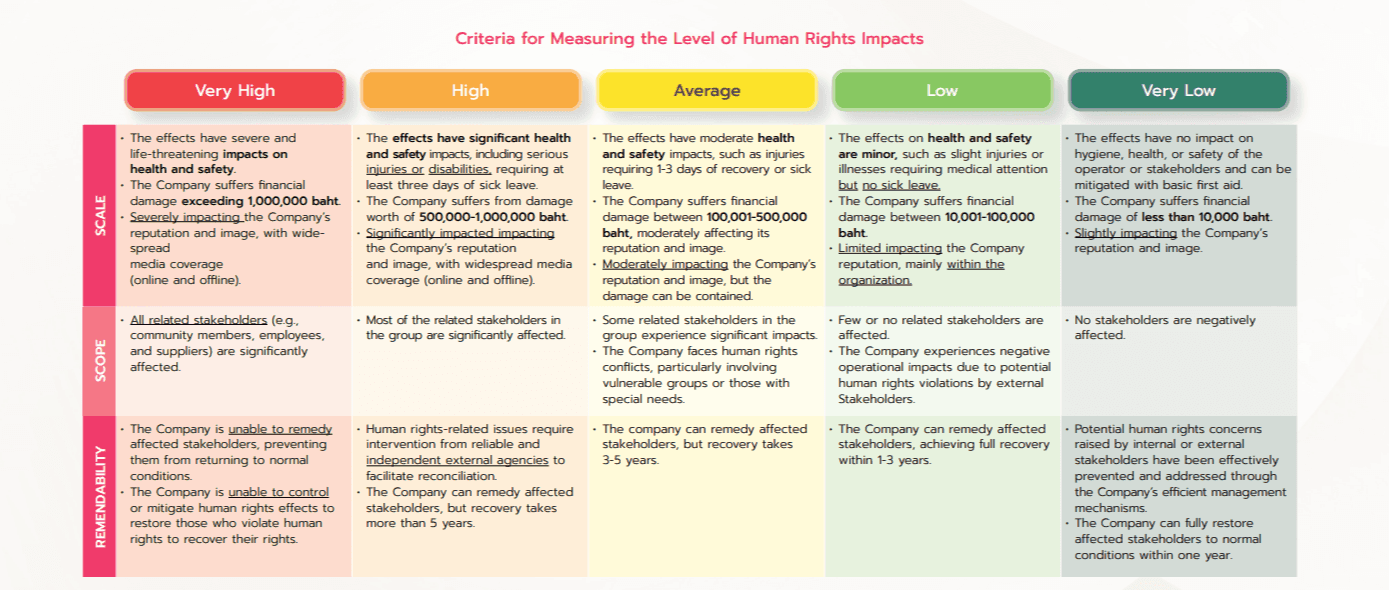
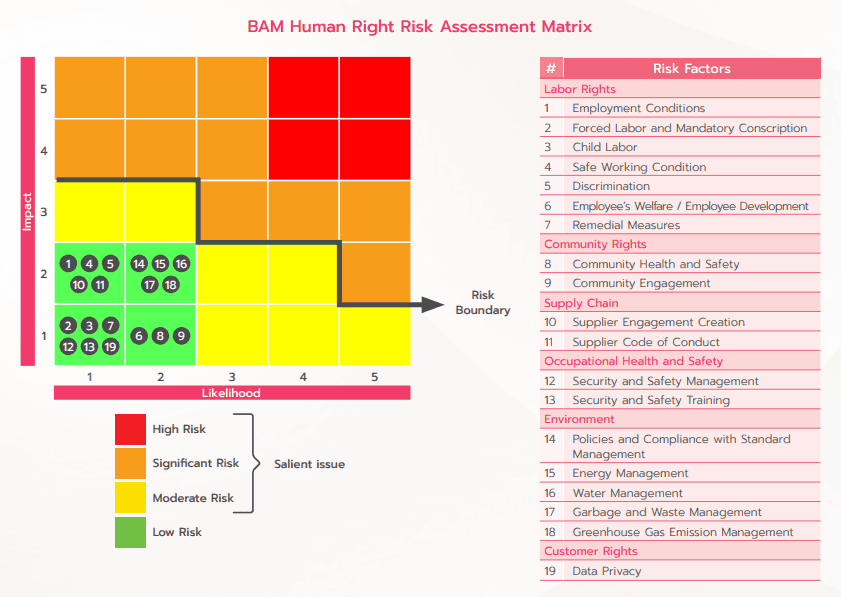
Assessment of Human Rights Impacts BAM assesses human rights impacts by evaluating the severity and likelihood of potential human rights issues. The assessment criteria are as follows:
Mitigation and Remediation of Impacts BAM conducts comprehensive assessment of potential and actual human rights risks, maps relevant value chain activities and affected stakeholders, and develops tailored mitigation and remediation strategies to address each human rights issue effectively and promptly.
Monitoring, Evaluation, and Reporting on Performance BAM continuously monitors and evaluates human rights performance and the effectiveness of mitigation measures. The Company's human rights risk assessment framework and management measures are summarized below:
The Human Rights Due Diligence (HRDD) assessment evaluated six core areas encompassing 19 associated risk factors. Findings indicate that BAM's overall human rights risk profile remains at a low level, demonstrating that the company manages potential human rights impacts at an acceptable level through appropriate mitigation measures and robust due diligence frameworks.
4
Step 4
|
Access to Remedy
BAM recognizes the importance of providing remedy to individuals and communities that may be affected by its business operations, particularly in situations involving emergencies or critical incidents in operational areas. Appropriate forms of remedy are determined which can include financial remedies, such as compensation or financial assistance, corrective actions, operational improvements and non-financial remedies, such as community development initiatives, designated emergency grievance points to provide initial support and remedy, including guidance and expert consultation. The Company has established accessible communication channels to enable stakeholders to raise concerns and submit complaints through structured processes. BAM provides accessible channels for potentially affected parties to submit complaints through designated grievance mechanisms or through its regional branch offices. All complaints are systematically reviewed to identify root causes and implement corrective and preventive actions in accordance with established procedures. In cases where remedy measures cannot be resolved at the operational level, the matter is escalated to the Board of Directors for consideration. Following initial resolution, Company representatives coordinate with community leaders and relevant government agencies to determine appropriate and effective solutions that address the concerns of all affected parties.
5
Step 5
|
Monitoring and Reporting
BAM conducts regular monitoring and tracking of human rights performance and continuously communicates human rights principles to employees through education and training. These actions aim to prevent potential issues that may pose risks of adverse impacts on the Company's operations and business relationships, and to support continuous improvement in human rights management.
Complaint and Whistleblowing Channels
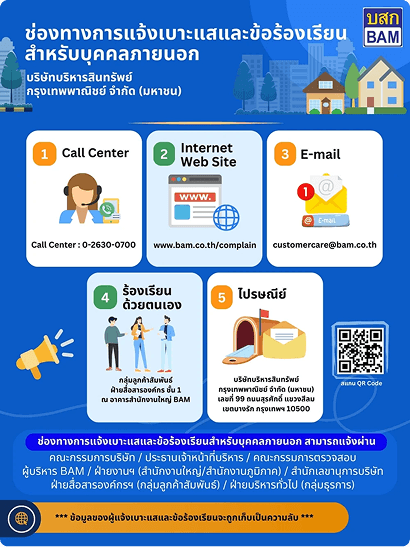
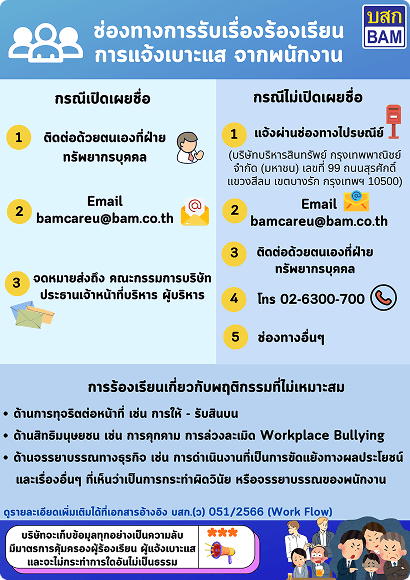
BAM has established confidential reporting channels that enable employees to report incidents safely, without fear of intimidation, discrimination, or retaliation. A Whistleblowing System and Whistleblower Protection Policy have been implemented to safeguard the rights of complainants and witnesses through strict confidentiality of all information received. An independent committee is appointed to investigate complaints in a transparent and impartial manner. BAM also discloses its human rights performance annually through its Sustainability Report and on the Company's website. Accessible channels are provided for all stakeholder groups to submit complaints or report potential human rights violations through the designated communication channels specified below.
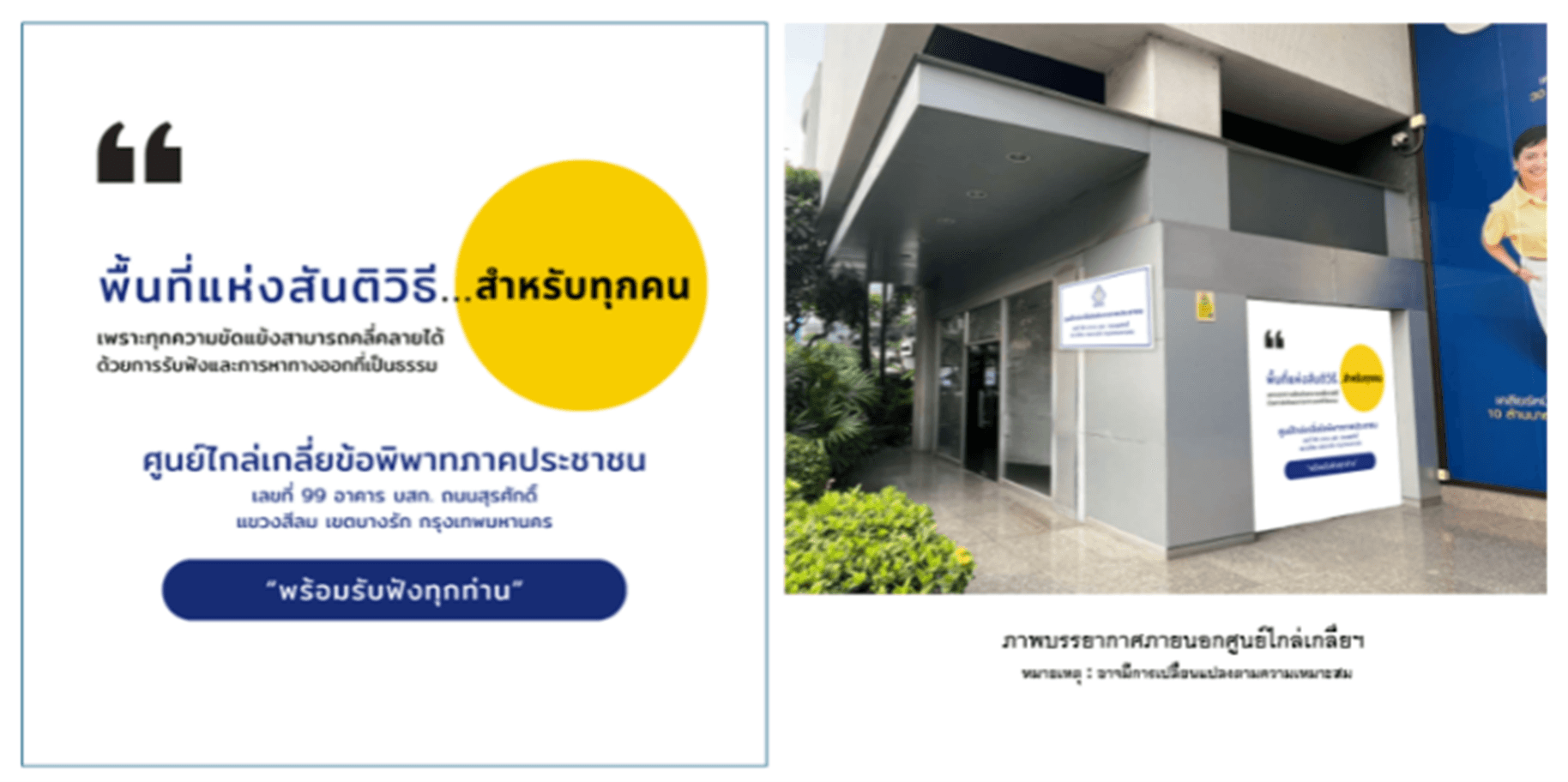
Public Mediation and Dispute Resolution Center
BAM has established the Public Mediation and Dispute Resolution Center to serve as an “intermediary mechanism” for facilitating remedy and resolving disputes between parties in both civil and criminal cases. The Center aims to reduce conflict, promote mutual understanding, and support constructive dialogue among all parties involved. BAM prioritizes the continuous development and capacity building of mediators to enhance operational standards that are transparent, impartial, and effective. The Center plays a significant role in supporting debtors' access to sustainable housing by facilitating negotiations to determine appropriate repayment arrangements acceptable to both parties. This approach helps alleviate debt burdens and contributes positively to social well-being. The operation of the Public Mediation and Dispute Resolution Center reduces the need for court proceedings while demonstrating the Company's commitment to conducting business responsibly, based on principles of fairness, respect for human rights, and peaceful coexistence.
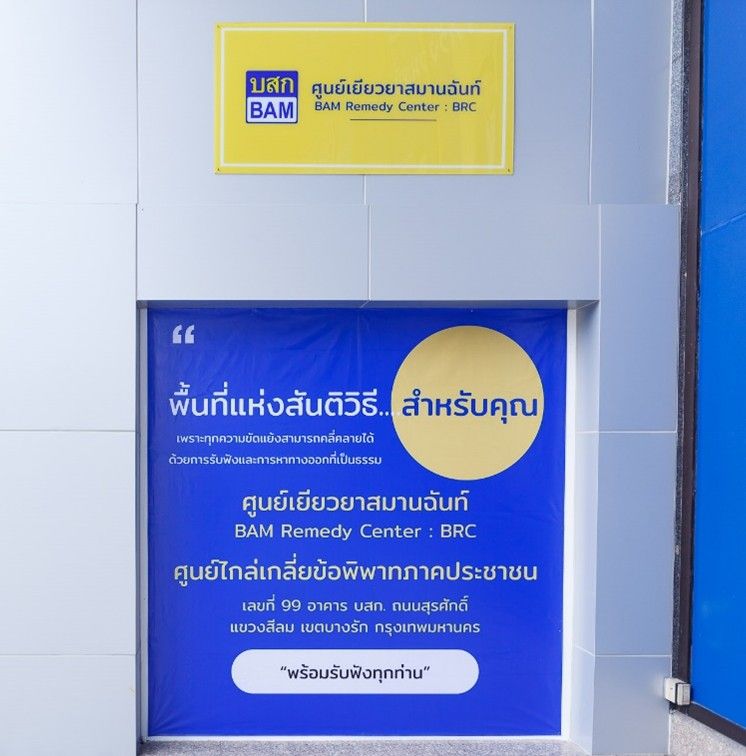
BAM Remedy Center: BRC
As a leading asset management organization in Thailand, BAM conducts its business in accordance with the principles of good corporate governance, transparency, and accountability to all stakeholder groups. The Company places strong emphasis on respecting human rights throughout its operations, in alignment with the United Nations Guiding Principles on Business and Human Rights (UNGPs). The UNGPs are structured around three core pillars:
Protect – Protection: the duty of the State to protect human rights.
Respect – Respect for Human Rights: the responsibility of businesses to respect human rights.
Remedy – Access to Remedy: the responsibility of businesses to provide access to remedy for individuals and communities affected by business operations
In conducting its business with respect for human rights in accordance with the UNGPs, BAM has implemented these three pillars systematically as outlined below:
Pillar 1: Protect – State Duty to Protect The State has the responsibility to prevent and address human rights violations arising from business activities through the enactment of laws, policies, and effective law enforcement, ensuring that both public and private sector entities respect human rights in practice. BAM has aligned its operations with the National Action Plan on Business and Human Rights (NAP), demonstrating its commitment to conducting business in a manner that respects human rights.
Pillar 2: Respect –Business Responsibility to Respect Human Rights The responsibility to respect human rights applies to businesses throughout all stages of their operations. As a company listed on the Stock Exchange of Thailand, BAM implements Human Rights Due Diligence (HRDD) processes across its business operations and supply chain. The Company has formally declared its commitment to respecting human rights and disclosed such commitments comprehensively in its Annual Report (Form 56-1), in accordance with Stock Exchange of Thailand requirements.
Pillar 3: Remedy – Access to Remedy for All Parties Under the United Nations Guiding Principles on Business and Human Rights (UNGPs), businesses have the responsibility to establish, or participate in, effective remedy mechanisms that enable individuals and communities affected by business activities to access appropriate remediation and redress. Such mechanisms may operate through judicial or non-judicial processes, including negotiation and mediation. Currently, there is no clear precedent in Thailand of a business establishing a dedicated remedy center for affected parties. In this context, BAM has taken the initiative to implement UNGP Pillar 3 systematically through the establishment of the “BAM Remedy Center (BRC).” The BRC serves as a non-judicial grievance mechanism that enables customers, business partners, employees, and members of the public affected by the Company's operations to access remedy in accordance with the effectiveness criteria for non-judicial grievance mechanisms under the UNGPs. The Center is designed to be accessible, timely, equitable, transparent, and compliant with applicable laws. For all these reasons, the BAM Remedy Center (BRC) was formally established as Thailand's first dedicated center of this nature. Moving forward, the Company will continue to develop clear operational processes, provide training on effective remedy practices to relevant employees, and further strengthen the implementation of the mechanism in a structured and sustainable manner.




.png&w=3840&q=75)
.png&w=3840&q=75)
.png&w=3840&q=75)
