Waste Management

Waste Management

        The company prioritizes waste management and promotes participation in the responsible use of resources to maximize benefits. This is coupled with raising awareness of the importance of waste management within the organization, which helps maintain a clean and healthy workplace. Additionally, it contributes to reducing environmental impacts and greenhouse gases while cutting waste disposal costs. Ultimately, these efforts lead to long-term positive environmental outcomes.

Key Activities/Projects

Tidy Office Happy Life 2024 Project

This project involves taking previously reused paper and processing it for recycling into what is known as Recycled Paper. The recycled paper comes in various shades including off-white, cream, yellow, brown, and golden brown, which are commonly used to produce postal boxes, paper bags, coffee cup sleeves, and notebooks, among other items. This project effectively reduces the use of natural resources and helps mitigate global warming issues from waste disposal. Through this initiative, 1,935.65 kilograms of paper have been processed for recycling, equivalent to reducing greenhouse gas emissions by 2,440 kilograms of carbon dioxide equivalent (kgCO2e).
Tidy Office Happy Life1.jpg        Tidy Office Happy Life2.jpg

poster04.jpg
poster03.jpg

Food Waste Composting Project

The company has implemented innovative food waste disposal technology to reduce landfill waste and greenhouse gas emissions. Since 2022, it has been piloted at the headquarters’ food court, utilizing biotechnology to decompose food waste into high-quality organic fertilizer. This fertilizer is used to improve soil quality, promote plant growth, and nourish trees. The company uses the fertilizer for growing vegetables at the headquarters, selling the produce to employees, and donating the proceeds to the “Friends Helping Friends Fund” to assist employees facing illness or accidents beyond company welfare benefits. In the past year, the project has produced 2,420 kilograms of organic fertilizer, equivalent to reducing greenhouse gas emissions by 1,919.79 kgCO₂e.

large_poster05_777de907b9.png

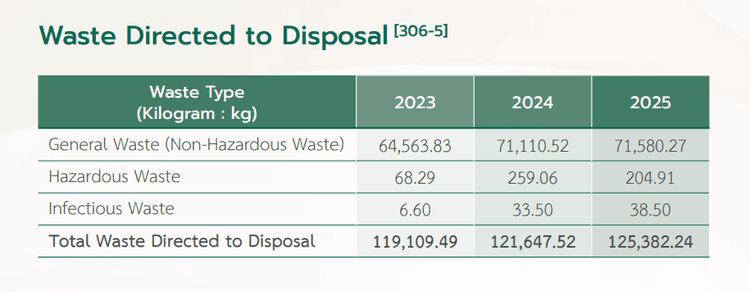
ทั้งนี้ มีปริมาณของเสีย ในปี 2567 เท่ากับ 121,647.52 กิโลกรัม เพิ่มขึ้นเมื่อเทียบกับปี 2566 เท่ากับ 11.93 %

Low Emission Support Scheme: Less Project

BAM received the Certificate of Recognition under the Low Emission Support Scheme: LESS at the “Climate Care Forum 2023: Time to REDUCE” (Help the World). The event was organized by the Stock Exchange of Thailand (SET) in collaboration with the Thailand Greenhouse Gas Management Organization (TGO) (Public Organization) to honor businesses that are part of the Climate Care Collaboration network. This recognition is awarded to organizations that demonstrate exemplary environmental management and efforts to reduce greenhouse gas emissions within the country.

small_climate_Care_0979763a28.png

Company Waste Volume Data

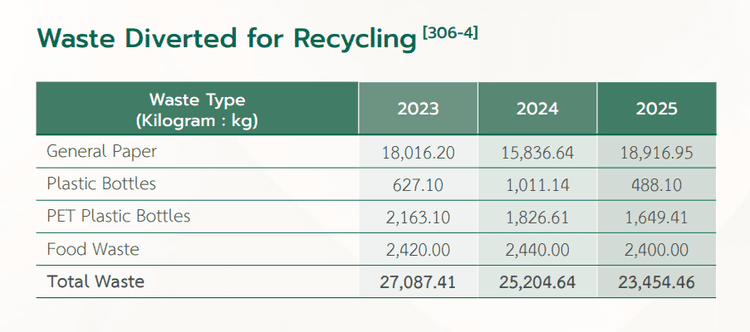
Company Recycled Waste Volume Data

Organizational Carbon Footprint Assessment

BAM has conducted an Organizational Carbon Footprint (Carbon Footprint for Organization: CFO) assessment at its head office building. This process involves the comprehensive collection of data on greenhouse gas (GHG) emissions and removals arising from the Company’s business operations and activities, ensuring that the results accurately reflect actual operational conditions. 

Scope 1: Direct GHG Emissions

Emissions directly generated from the Company’s operations and activities, including the combustion of various types of fuels, leakage of refrigerants, leakage of fire suppression agents, methane emissions from restroom use (septic tank system), and wastewater treatment facilities.

Scope 2: Indirect GHG Emissions

Emissions indirectly generated from purchased electricity used by the organization. In this case, it refers to electricity purchased from the Metropolitan Electricity Authority.

Scope 3: Other Indirect GHG Emissions

Emissions resulting from various indirect sources, including municipal water consumption, paper usage, fuel and energy procurement, transportation of raw materials from suppliers, waste generated from corporate activities, business travel, and employee commuting.

The calculation of greenhouse gas emissions covers the following seven gases: carbon dioxide (CO2), methane nitrous oxide (N2O), hydrofluorocarbons (HFCs), perfluorocarbons (PFCs), sulfur hexafluoride (SF6), and nitrogen trifluoride (NF3). The assessment was conducted in accordance with the Guidelines for Organizational Carbon Footprint Calculation and Reporting issued by the Thailand Greenhouse Gas Management Organization (Public Organization) and the Greenhouse Gas Protocol (Revised Edition, October 2016). Global Warming Potential (GWP) values were referenced from the Intergovernmental Panel on Climate Change (IPCC) Fifth Assessment Report (AR5). Based on the calculation results, the Company has developed a five-year long-term greenhouse gas emission reduction plan.

Reducing organizational greenhouse gas emissions through seven key strategies

1.    Enhancing energy efficiency (Scopes 1, 2, and 3)
2.    Fuel switching and adoption of electric vehicles (EVs) (Scopes 1 and 2)
3.    Water conservation (Scope 3)
4.    Waste management and recycling (Scope 3)
5.    Increasing renewable energy consumption (Scope 2) 
6.    Promoting green awareness among employees and customers/suppliers (Scope 3)
7.    Reforestation (including tree planting of approximately 10 rai per year 

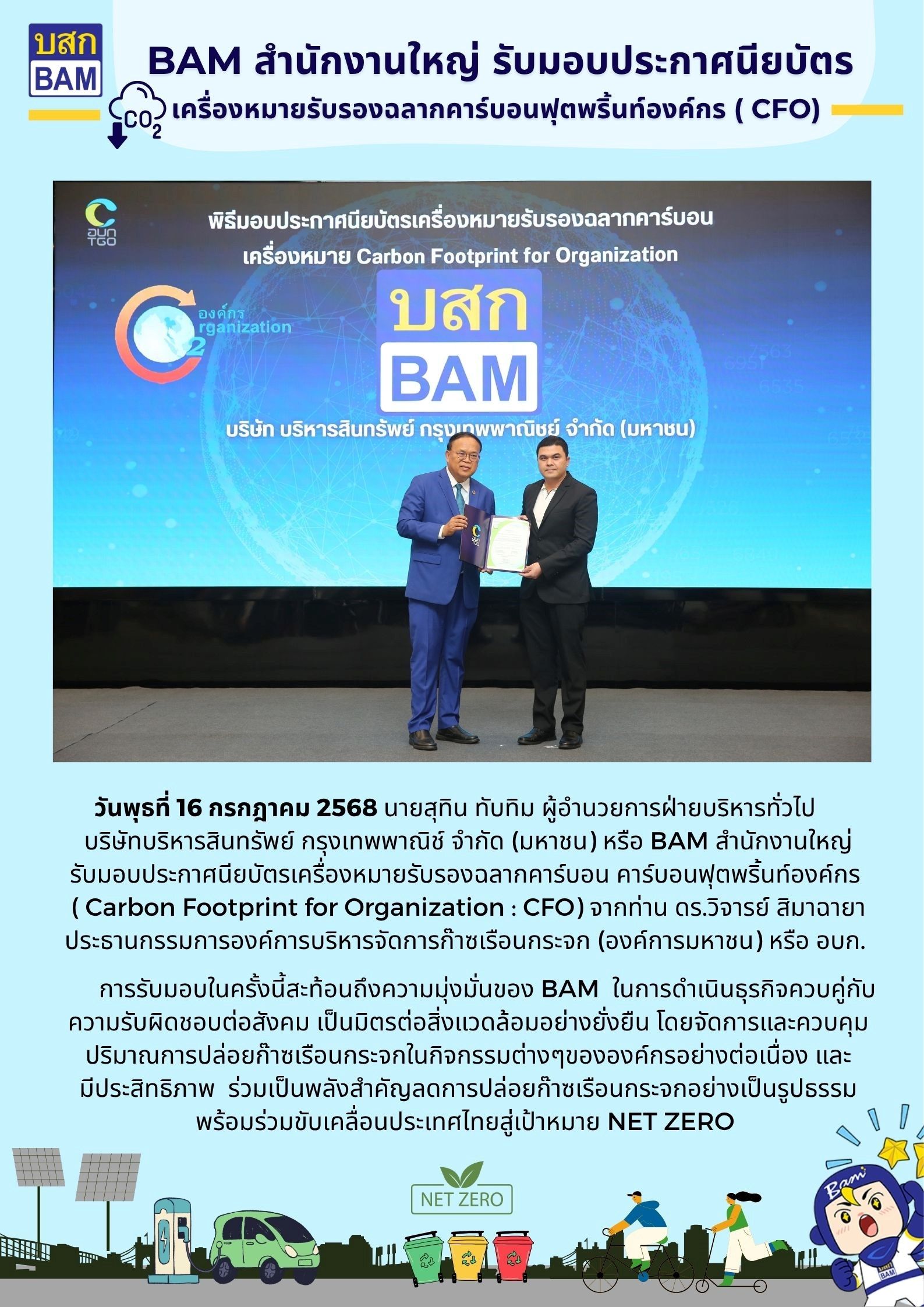
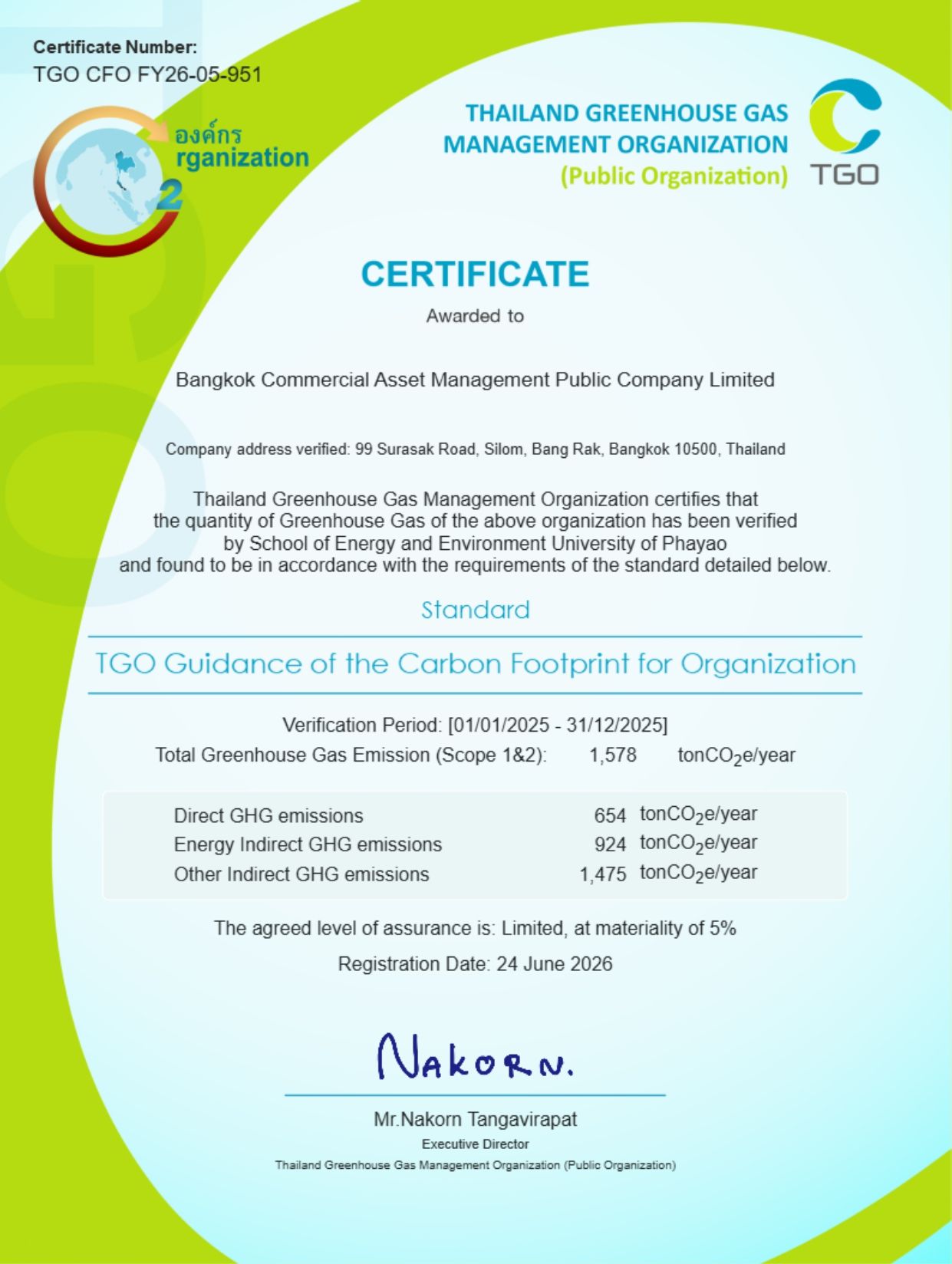
        In 2025, the Company prepared its organizational carbon footprint data and submitted the information to the Thailand Greenhouse Gas Management Organization (Public Organization) (TGO) for registration under the Carbon Footprint for Organization (CFO) labeling program. The assessment indicated total greenhouse gas emissions of 1,710 tons of CO2eq equivalent per year. As a result, the Company was granted authorization to use the official Carbon Footprint for Organization certification mark.
 

Picture1.png       Picture2.png

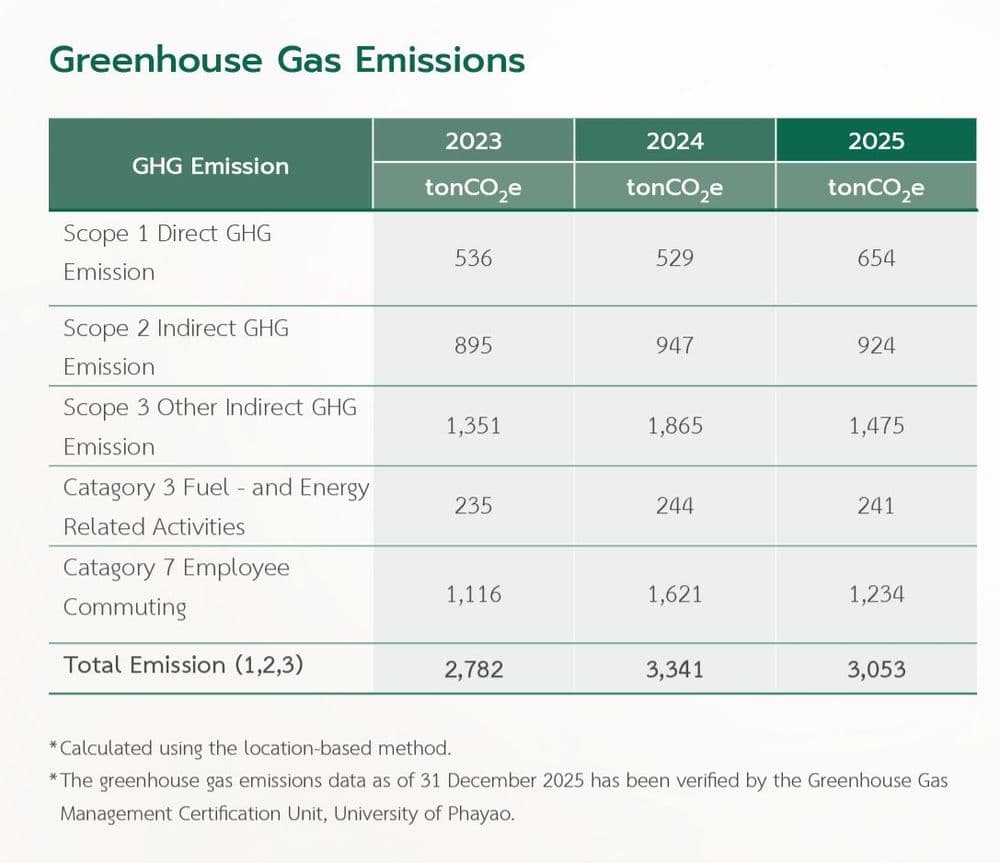
Company Greenhouse Gas Emission Data