Energy Management

Energy Management

BAM prioritizes and is committed to implementing efficient and effective energy management, recognizing that energy resources are essential for daily life, business operations, and the overall quality of life in society. The Company acknowledges that energy consumption is systematically interconnected with natural resources and environmental systems. Since energy acquisition and consumption often rely on finite resources, such as oil, natural gas, and coal, the Company understands that these processes inevitably result in environmental impacts. Furthermore, the Company’s operations and business activities may generate environmental impacts, including both direct and indirect greenhouse gas emissions, arising from electricity consumption, water usage, vehicle operations, and consumption patterns that contribute to daily landfill waste These activities contribute to pollutant emissions that adversely affect the environment, local communities, and workplace conditions, potentially impacting the health of employees and visiting customers, and represent a significant driver of climate change.
The Company has established a comprehensive energy management policy designed for consistent implementation across all departments, emphasizing the reduction of energy consumption, the promotion of awareness regarding conservation, and the support of renewable energy use to achieve continuous and sustainable development. This policy encompasses strict compliance with all relevant laws, regulations, and international standards, while ensuring that adequate resources are allocated for the implementation of efficient energy management methods and the development of appropriate systems to eliminate unnecessary energy loss. Furthermore, the policy focuses on greenhouse gas emission reduction, the promotion of renewable energy, and the implementation of environmentally friendly activities (Go Green), alongside continuous awareness-raising among employees and service users regarding energy conservation. To guarantee that these strategies remain effective, all energy management operations are subjected to a formal review and improvement process on an annual basis.
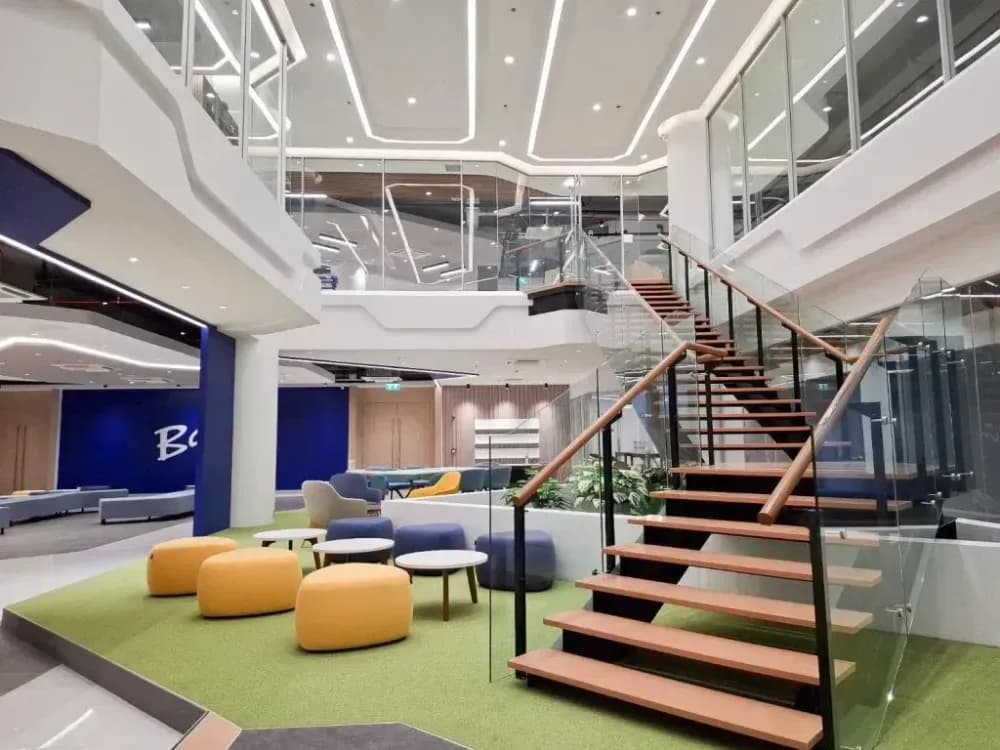
The Three Key Principles of Energy Management

BAM conducts personnel development (Peopleware) by focusing on providing personnel with the necessary knowledge to create and develop appropriate management systems (Systemware) and to manage various machinery and equipment (Hardware) effectively. 

People Ware

People Ware

  • Conduct annual energy and environmental conservation training programs.
  • Promote interactive and engaging activities that are easy to understand, enjoyable, and practical for employees to apply in their daily work.
  • Enhance internal communication to build awareness and understanding.
System Ware

System Ware

  • Implement the 8-step energy management framework from the Department of Alternative Energy Development and Efficiency (DEDE) to establish a systematic and efficient energy management process.
Hard Ware

Hard Ware

  • Upgrade and replace tools and equipment with more energy-efficient alternatives.
  • Promote the use of renewable and clean energy.
  • Establish department-specific measures within the organization.

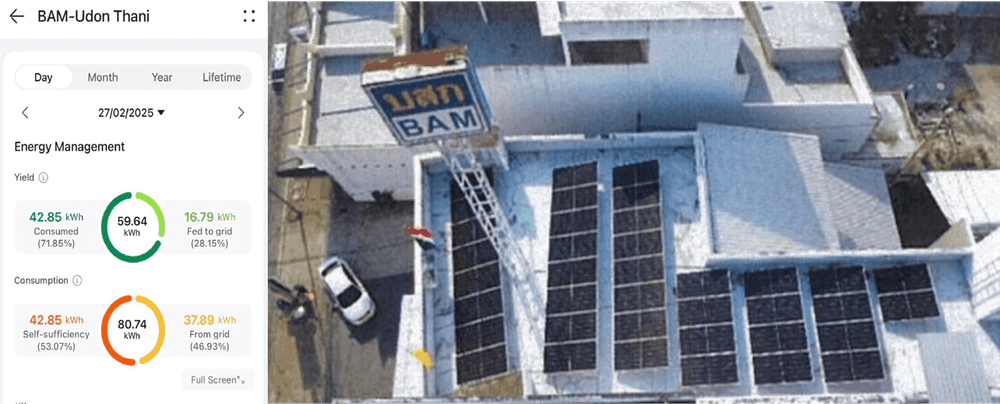
Promotion of Solar Rooftop Installations across Seven Regional Branch Offices

       BAM has installed solar photovoltaic power generation systems across seven regional branch office buildings nationwide, utilizing on-grid systems that integrate solar energy with local utility power supplies. The installed capacities are as follows: 1. Ratchaburi Office – 28.05 kWp 2. Saraburi Office – 28.05 kWp 3. Rayong Office – 19.80 kWp 4. Nakhon Ratchasima Regional Office – 19.80 kWp 5. Udon Thani Office – 19.80 kWp 6. Ubon Ratchathani Office – 16.50 kWp 7. Prachuap Khiri Khan Office – 22.00 kWp

future-direction_hero-banner_2.4-1_desktop(3).png

Electric Vehicle (EV) Transition Measures

BAM implements measures to promote the use of electric vehicles (EVs), including the installation of EV chargers, to replace internal combustion engine vehicles that have reached the end of their operational lifespans. This initiative applies to commonly used vehicles at both the head office and branch offices nationwide, with the primary objectives of encouraging clean energy adoption and reducing greenhouse gas emissions. Since 2025, seven EVs have been leased and purchased to serve as a pilot project for use across these locations. This transition is projected to save 20,778 liters of fuel (comprising a decrease of 22,298 liters of gasoline and an increase of 1,519 liters of diesel), representing a cost saving of THB 642,414.4 per year (Gasohol 95: THB 30.85 per liter; Diesel: THB 29.94 per liter, as of 3 February 2026). These fuel savings are equivalent to a reduction in greenhouse gas emissions of 46,496.08 kilograms of carbon dioxide equivalent (kgCO2e) 

Company's Energy Consumption by Type

Energy Management