
Promoting the Sustainable Development Goals

The Company believes that sustainability cannot be created by any one person, but must come from the cooperation of all sectors, both internal and external, that contribute to the development of the organization to grow continuously and sustainably. The Sustainability Strategy is a “balance” between growing business operations and caring for the environment, society and good governance, which will enable the Company to grow in parallel with society sustainably.


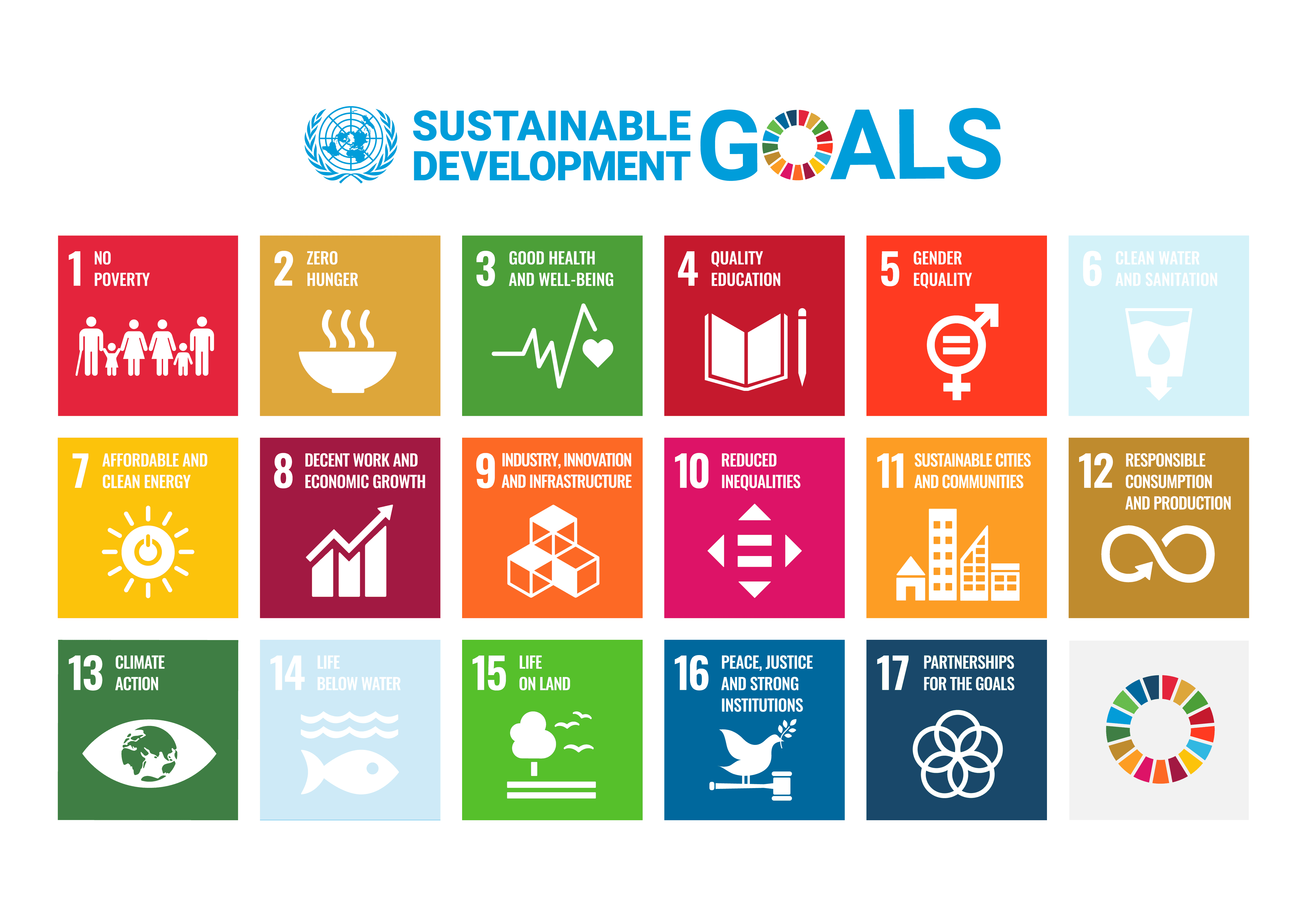
The Board of Directors has established policies, rules, and guidelines in various aspects of the Company in accordance with the Good Corporate Governance Principle and significant sustainability topics in economic, social and environmental dimensions, including reducing the impact of business operations on all groups of stakeholders, leading to good relationships, to support the United Nations' Sustainable Development Goals (SDGs), the Company and society will grow with potential and sustainability together in the long run. The Company has implemented operations in line with 15 of the 17 Sustainable Development Goals, consisting of :

SDGs_2025.png

Alignment with Sustainable Development Goals

E-WEB-Goal-01.png

Goal 1

No Poverty (End poverty in all its forms everywhere)

BAM recognizes the importance of conducting business in a manner that improves the quality of life for all segments of society. The Company is dedicated to alleviating poverty in all its forms through initiatives that foster sustainable economic and social opportunities. Key initiatives driving this objective include the “Public Asset” program, which provides low-income individuals with access to homeownership through highly accessible installment plans starting at only THB 500 per month, and the “Debt Resolution Center,” which supports customers through strategic debt restructuring to ease financial burdens and restore financial stability. Furthermore, the Company implements various corporate social responsibility (CSR) projects, such as “Home & Hope,” which provides essential housing support to underprivileged groups across all regions, and “Tonkit Cheewit Yangyuen” (Sustainable Living Learning School), which supports school lunch programs and agricultural learning plots to strengthen food security and community resilience nationwide.
These efforts reflect a steadfast commitment to poverty alleviation, the reduction of social inequality, and the creation of sustainable opportunities for improved livelihoods throughout society.
 

E-WEB-Goal-02.png

Goal 2

Zero Hunger (End hunger, achieve food security and improved nutrition and promote sustainable agriculture)

BAM implements the “Tonkit Cheewit Yangyuen” (Sustainable Living Learning School) project for primary schools nationwide on an annual basis to promote food security and improved nutrition among students. This initiative emphasizes experiential learning through hands-on agricultural activities conducted within school grounds, including rice cultivation using the seedling-throwing (na-yon) method, pesticide-free vegetable farming, mushroom cultivation, fish farming, and poultry raising for egg production.
The produce harvested from the project serves as key ingredients for school lunch programs, enhancing student nutrition through balanced meals that cover all five essential food groups. Beyond nutritional benefits, the initiative fosters practical skills and a deep understanding of sustainable agriculture among students. These activities are designed for integration into school curricula, contributing to national efforts to end hunger among students while establishing a strong foundation for long-term food security and the continuous improvement of quality of life. 

E-WEB-Goal-03.png

Goal 3

Good Health and Well-being (Ensure healthy lives and promote well-being for all at all ages)

BAM recognizes the importance of promoting health and well-being across all segments of society by supporting key public health initiatives. This includes financial contributions for the procurement of medical equipment for Phra Mongkut Klao Hospital and support for the operating room improvement fund at Siriraj Hospital. Furthermore, BAM has established a policy to support national public health efforts and address medical equipment shortages in public hospitals. Through its long-standing medical equipment donation program, the Company has provided continuous support to 10 public hospitals annually for 13 consecutive years. This initiative aims to enhance the efficiency of medical personnel and improve public access to high-quality, effective healthcare services.
BAM also prioritizes employee well-being, workplace safety, and a healthy working environment as essential drivers of organizational efficiency. The Company is committed to achieving zero workplace accidents and occupational injuries through robust safety and occupational health management in compliance with relevant laws, regulations, and standards. These safety measures apply to all stakeholder groups, including customers, suppliers, external contractors, and vendors operating within areas under the Company’s supervision, encompassing the head office and regional branch offices nationwide. To further promote a culture of health, the Company implements various initiatives such as annual health check-ups, on-site medical services provided by doctors and nurses, and well-equipped medical rooms. Additionally, the Company provides facilities and activities to encourage physical exercise and regularly disseminates knowledge on healthcare, disease prevention, and the mitigation of work-related illnesses.

E-WEB-Goal-04.png

Goal 4

Quality Education (Ensure inclusive and equitable quality education and promote lifelong learning opportunities for all)

BAM recognizes the importance of education and lifelong learning as fundamental drivers for the development of human capital, organizations, and the nation at large. Accordingly, the Company has demonstrated a long-standing commitment to education by supporting diverse learning initiatives for the 18th consecutive year. These efforts include the provision of educational scholarships to secondary and tertiary-level students to promote equitable access to education, as well as the granting of postgraduate scholarships for both domestic and international studies to employees and qualified external candidates. Furthermore, the Company offers professional internship opportunities designed to provide students with practical, high-value experience that can be applied to their future careers. In addition, the Company prioritizes the continuous development of its personnel through integrated training programs and knowledge-sharing initiatives. By leveraging both offline and online learning platforms, The Company empowers employees to enhance their professional competencies and pursue self-directed learning at their convenience.

E-WEB-Goal-05.png

Goal 5

Gender Equality (Achieve gender equality and empower all women and girls)

BAM believes that diversity is a vital driving force for sustainable growth. Guided by the principle of "Unity in Diversity," which is reflected through initiatives such as the CEO Town Hall. The Company promotes awareness of inclusive coexistence and encourages respect for diverse ideas, perspectives, and backgrounds. Recognizing that every individual holds equal value, the Company is committed to fostering an organizational culture that is respectful, inclusive, and open, providing employees and stakeholders with opportunities to express their opinions and fully realize their potential.  
To support this commitment, BAM has established human rights policies and guidelines on Diversity, Equity, and Inclusion (DEI) to serve as a common framework for employees at all levels. These policies aim to ensure a non-discriminatory working environment and provide equal opportunities for growth and advancement for all. For the Company, “equality is not merely a statement of principle but a commitment translated into concrete actions integrated throughout all levels of the organization.”
 

E-WEB-Goal-07.png

Goal 7

Affordable and Clean Energy (Ensure access to affordable, reliable, sustainable and modern energy for all)

BAM is committed to effective energy management and the mitigation of environmental impacts arising from its business operations. The Company seeks to maximize the efficiency of resource and energy consumption through the adoption of innovative technologies and continuous operational improvements. Key initiatives driving this transition include the integration of electric vehicles (EVs) into the corporate fleet, the installation of the installation of solar photovoltaic systems at both the head office and regional branch offices, and the systematic replacement of aging equipment to enhance overall energy and resource efficiency.

E-WEB-Goal-08.png

Goal 8

Decent Work and Economic Growth (Promote sustained, inclusive and sustainable economic growth, full and productive employment and decent work for all)

BAM places a strong emphasis on sustainable economic growth, serving as a national buffer for the economy. The Company implements policies to assist honest debtors in reintegrating into the economic system while revitalizing secondary real estate assets to generate added value. In addition, the Company promotes decent employment opportunities through inclusive labor practices, including the employment of persons with disabilities as vulnerable groups and the procurement of their products for organizational use to support sustainable income generation. The Company also provides employment opportunities for retired personnel and prioritizes the hiring of local workers to strengthen economic resilience and foster sustainable growth within communities.

E-WEB-Goal-09.png

Goal 9

Industry, Innovation and Infrastructure (Build resilient infrastructure, promote inclusive and sustainable industrialization and foster innovation)

BAM leverages digital technology and innovation to enhance service quality and optimize business processes. These advancements provide customers with streamlined access to products and services through multiple channels, while simultaneously creating new business opportunities and strengthening the Company’s competitive advantage. In addition, the Company focuses on enhancing operational efficiency to reduce resource consumption and operating costs by minimizing travel requirements and fuel usage. The Company also develops essential public utility infrastructure through investments in sustainable solutions, such as advanced wastewater treatment systems and water resource management within its office buildings. 

E-WEB-Goal-10.png

Goal 10

Reduced Inequality (Reduce inequality within and among countries)

BAM is deeply committed to addressing social inequality by leveraging its core capabilities to ensure universal access to its products and services. The Company strives to serve all segments of society, regardless of age, gender, physical ability, economic status, ethnicity, or other identifying factors. Key initiatives undertaken in this regard include the “Public Asset” program and the “Sukjai: Home Redemption” program initiative.
Furthermore, the Company upholds the principles of fairness, equality, and non-discrimination across its workforce nationwide. These standards are consistently applied throughout the entire employee lifecycle, encompassing recruitment, professional development, retention, and termination processes. 
 

E-WEB-Goal-11.png

Goal 11

Sustainable Cities and Communities (Ensure access for all to adequate, safe and affordable housing and basic services and upgrade slums)

As the largest asset management company in the country, BAM is committed to conducting its business with social responsibility, recognizing its vital role in promoting equitable access to adequate, safe, and affordable housing, including basic services. A key initiative reflecting this commitment is the “Public Asset” program, which specifically targets more than 20 million informal workers, including low-income earners, freelancers, and self-employed individuals. By providing accessible pathways to homeownership or secure and affordable housing, the program helps mitigate financial constraints and barriers to housing credit, thereby contributing to the reduction of socio-economic disparities.
Furthermore, the “Public Asset” program contributes to improving quality of life and strengthening community stability, including the upgrading of informal settlements or slums. These efforts help reduce social inequality and promote equitable access to safe housing, enabling individuals and families to establish secure homes as a fundamental foundation for sustainable livelihoods and long-term social development.
 

E-WEB-Goal-12.png

Goal 12

Responsible Consumption and Production

BAM prioritizes efficient resource management and the mitigation of environmental impacts through systematic waste management and the promotion of reuse and recycling practices. Central to this commitment are initiatives such as the “Tidy Office Happy Life” program, the installation of food waste composting machines, dedicated plastic bottle separation and recycling projects, and the implementation of a water recycling system (RO Reject). The Company further encourages active employee participation in the efficient use of energy and resources, as well as internal waste management practices aimed at reducing greenhouse gas emissions. These efforts are carried out through the Green Office initiative under the Green Office Promotion Program of the Department of Environmental Quality Promotion, Ministry of Natural Resources and Environment.

E-WEB-Goal-13.png

Goal 13

Climate Action (Take urgent action to combat climate change and its impacts)

BAM has implemented a comprehensive organizational energy reduction plan centered on minimizing energy consumption within office buildings. This is achieved through the adoption of high-efficiency technologies and the modernization of internal infrastructure to optimize carbon reduction performance. In parallel, the Company actively fosters climate awareness among its employees through targeted training programs, knowledge-sharing platforms, and continuous awareness activities. By encouraging employees at all levels to prioritize the efficient consumption of energy and resources, the Company effectively minimizes its environmental impact and reduces greenhouse gas emissions. Beyond these measures, the Company conducts climate-related risk management, prepares its organizational carbon footprint assessment, and establishes greenhouse gas emission reduction targets to support long-term climate resilience and sustainable operations.

E-WEB-Goal-15.png

Goal 15

Life on Land (Protect, restore and promote sustainable use of terrestrial ecosystems, and sustainably manage forests)

BAM actively supports tree planting and forest restoration initiatives through the BAM CARE program of Bangkok Commercial Asset Management Public Company Limited. This initiative has been strategically implemented across Suphan Buri, Sa Kaeo, and Kalasin provinces, with a targeted focus on the rehabilitation of non-performing assets (NPAs) through tree planting. These efforts aim to create sustainable green spaces while protecting terrestrial ecosystems and enhancing the quality of life of surrounding communities. Moreover, the Company has implemented a forest planting project in Chiang Mai Province to promote sustainable, smoke-free livelihoods. The initiative focuses on planting tree species that contribute to energy reduction, lower smoke emissions, and enhance carbon dioxide absorption. This is achieved through the selection of resilient native tree species, as well as trees that can generate supplementary income, such as fruit bearing trees, fast-growing species, and high-value timber. These initiatives support the sustainable use of terrestrial ecosystems while strengthening environmental and economic resilience within local communities.

E-WEB-Goal-16.png

Goal 16

Peace, Justice, and Strong Institutions (Promote peaceful and inclusive societies for sustainable development)

BAM is firmly committed to the highest standards of good corporate governance and maintains a zero-tolerance policy towards all forms of corruption. As a certified member of the Thai Private Sector Collective Action Against Corruption (CAC), BAM has established and publicly communicated comprehensive human rights policies and practices. these measures are designed to instill a culture of integrity and promote a deep organizational awareness of human rights protection.  The Company upholds the fundamental principles of equality, fairness, and non-discrimination, strictly prohibiting any form of harassment or misconduct toward stakeholders and vulnerable groups. Furthermore, the Company ensures rigorous compliance with all applicable laws, as well as international human rights principles and standards. 

E-WEB-Goal-17.png

Goal 17

Partnerships for the Goals

BAM actively fosters strategic partnerships with both public and private sector organizations to enhance operational performance, including drive value creation for stakeholders, and contribute to broader societal development. These collaborations also support collective efforts to address the escalating impacts of climate change. Key Partnerships and Collaborative Initiatives include:
•    Maintain an active membership in the Thai Private Sector Collective Action Against Corruption (CAC).
•    Engage with the Stock Exchange of Thailand (SET) through the Climate Care Collaboration Platform to advance corporate environmental management.
•    Partner with the Thailand Greenhouse Gas Management Organization (TGO) to drive greenhouse gas reduction initiatives and accelerate the transition towards a sustainable low-carbon economy.
•    Partner with the Thailand Carbon Neutral Network.
•    Collaborate with government agencies and civil society organizations to provide critical assistance to those affected by crises and vulnerable groups, ensuring an improved quality of life through various dedicated corporate initiatives. 
•    Partner with Haze Free Company Limited to implement reforestation initiatives that support sustainable, smoke-free livelihoods while improving farmers’ health and economic well-being.